
Travelling overseas is easier when your phone works the moment you land. You need data for maps, ride-hailing apps, WhatsApp, hotel bookings, flight updates, online banking, food delivery, translation tools and emergency contacts. But choosing the right roaming option can be confusing, especially when you have both prepaid and postpaid choices.
Should you buy a prepaid roaming pass before your trip? Or should you use a postpaid roaming pass linked to your monthly plan? Which one gives better control? Which one is more convenient? Which one is safer if you want to avoid surprise charges?
The answer depends on how you travel, how often you travel, how much data you use, and whether you prefer prepaid control or postpaid convenience.
There is no single perfect roaming option for everyone. A student going to Thailand for three days may need something different from a business traveller visiting Singapore every month. A family on holiday may have different needs from a solo traveller using only maps and WhatsApp.
This guide explains how to compare both options and choose the right roaming setup before you leave Malaysia.
What Is a Prepaid Roaming Pass?
A prepaid roaming pass is a roaming add-on that prepaid users can buy before or during overseas travel. You pay upfront and receive a set roaming benefit, usually mobile data for selected countries and a fixed validity period.
The biggest advantage is spending control. Since you pay first, you know your cost before using the service. This makes prepaid roaming useful for budget-conscious travellers, students, short-trip users, backup-line users and people who do not want roaming charges added to a monthly bill.
A prepaid roaming pass is also simple for occasional travel. If you only travel once or twice a year, you can buy a pass only when needed. You are not tied to a monthly postpaid plan just for travel.
However, prepaid roaming may require more planning. You need to check the pass validity, destination coverage, data quota and whether calls or SMS are included. Many prepaid roaming passes are data-focused, so normal voice calls and SMS may be charged separately.
What Is a Postpaid Roaming Pass?
A postpaid roaming pass is a roaming option for postpaid users. It may be activated as an add-on, bundled with a specific plan, or charged based on usage depending on the provider and destination.
The biggest advantage is convenience. Postpaid users usually prefer one monthly bill, easy activation and less need to manage top-ups or credit balance while travelling. This is useful for business travellers, frequent flyers, working adults and users who want roaming to be part of their regular mobile setup.
A postpaid roaming pass can also be more practical if you travel often to the same countries. Some postpaid plans may include roaming benefits for selected destinations, which can be valuable if those destinations match your travel pattern.
The trade-off is that postpaid roaming must be managed carefully. If you use roaming outside your pass coverage or forget to check charges, additional costs can appear on your bill.
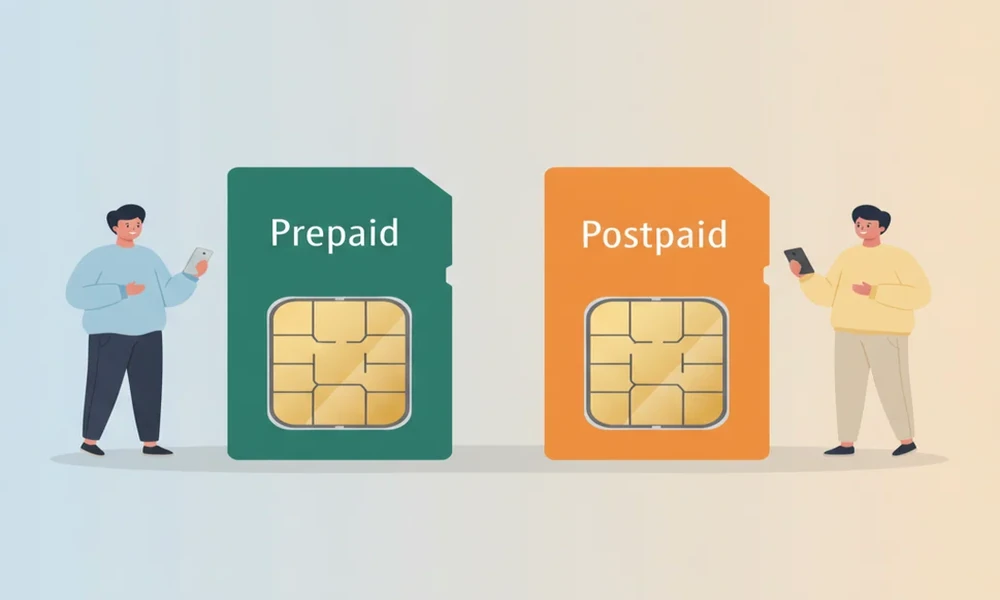
The Main Difference: Control vs Convenience
The simplest way to compare prepaid and postpaid roaming is this:
Prepaid roaming gives you stronger spending control.
Postpaid roaming gives you stronger convenience.
With prepaid, you buy what you need and use it within the pass limits. Once the pass expires or data runs out, you decide whether to buy again. This makes it easier to limit spending.
With postpaid, roaming is often easier to manage through your existing account. You do not need to worry about reload balance in the same way. But because charges appear later on your bill, you must be more careful about destination coverage, standard roaming rates and background data usage.
The best roaming phone plans are the ones that match your travel habits, not just your current mobile plan type.
When a Prepaid Roaming Pass Makes More Sense
A prepaid roaming pass is usually better for travellers who want cost control.
It works well for short holidays, student travel, budget trips, occasional overseas visits, family members with prepaid lines, backup travel SIMs and users who do not want bill surprises.
For example, if you are travelling to Thailand for a weekend and mainly need data for maps, WhatsApp and social media, a prepaid roaming pass can be enough. You pay upfront, use the data during the trip and avoid a larger postpaid commitment.
Prepaid roaming also works well if you are helping a child, parent or senior family member travel. You can set up the pass before departure and limit the risk of unexpected spending.
Choose prepaid roaming if your main priority is control.
When a Postpaid Roaming Pass Makes More Sense
A postpaid roaming pass is usually better for frequent travellers and users who want convenience.
It suits working adults, business travellers, cross-border travellers, users who travel monthly, and people who already prefer postpaid billing. If you visit Singapore, Indonesia or Thailand often, a postpaid plan with roaming benefits may be more convenient than buying separate roaming passes each time.
Postpaid roaming can also be useful if your phone is important for work. You may need email, WhatsApp, work apps, online meetings, cloud access and customer communication while overseas. In that case, monthly convenience may matter more than buying one-off passes.
Choose postpaid roaming if your main priority is ease of use and regular travel support.
Compare Destination Coverage First
Before choosing any roaming option, check whether your destination is covered.
This is the first and most important step. Do not assume one roaming pass works everywhere. Some passes cover only selected ASEAN countries. Some cover APAC destinations. Others may cover wider global zones.
If you are visiting one country, a country-specific pass may be enough. If you are visiting multiple countries, check whether one pass covers all destinations. Otherwise, you may need a new pass or may be charged standard roaming rates when you move to another country.
Good roaming phone plans should make country coverage clear before you travel.
Compare Data Quota Based on Real Travel Usage
Your roaming data requirement depends on what you do overseas.
Light users may only need data for WhatsApp, Google Maps, Grab, hotel bookings and occasional browsing. Regular travellers may use social media, restaurant searches, online payments and photo uploads. Heavy users may stream videos, use hotspot, attend video calls or work remotely.
A small pass may be enough for a short trip. A larger pass may be needed for business travel or a longer holiday.
When comparing a prepaid roaming pass and a postpaid roaming pass, do not choose only by price. Compare how much usable data you get for the destination and validity period.
If the data is too little, you may need extra top-ups. If it is too much, you may be paying for unused quota.
Check Validity Carefully
Validity can change the real value of a roaming pass.
A 24-hour pass may be useful for a one-day business trip. A 3-day pass may suit a weekend holiday. A 7-day pass may be better for longer travel.
If you buy a pass with shorter validity than your trip, you may need to purchase another one midway. If you buy a longer pass than needed, you may waste money.
For prepaid users, validity is especially important because the pass usually works within a fixed period. For postpaid users, validity also matters because roaming benefits may reset by day, billing cycle or pass period depending on the plan.
Always match the pass validity with your actual travel dates.
Check Calls and SMS Separately
Many travellers assume roaming passes cover everything. That is not always true.
Some roaming passes are data-only. That means WhatsApp, browsing and maps may work through mobile data, but normal voice calls and SMS may be charged separately. Receiving calls while overseas may also be chargeable depending on the roaming arrangement.
This matters if you need to receive banking OTPs, call hotels, contact airlines, speak to clients or make emergency calls.
Before choosing any roaming phone plans, check whether calls and SMS are included or charged separately. If they are not included, check standard roaming rates before departure.
Watch Out for Background Data
Roaming data can finish faster than expected because your phone uses data in the background.
Email syncing, app updates, cloud photo backup, software updates, location services and push notifications can all consume data while you are travelling.
Before you leave Malaysia, turn off automatic app updates, disable cloud backup on mobile data, download offline maps and monitor your usage during the trip.
This matters for both prepaid and postpaid roaming. With prepaid, background usage can finish your quota quickly. With postpaid, it can lead to additional charges if you go outside pass limits.
Which Is Better for Short Holidays?
For short holidays, prepaid roaming is often the safer choice. You buy a pass for the trip, control your cost and avoid monthly billing surprises.
A prepaid roaming pass is especially practical for 2-day, 3-day or 5-day trips where you mainly need maps, messaging and basic browsing.
However, if you already have a postpaid plan with roaming included for your destination, then postpaid may be more convenient.
Which Is Better for Business Travel?
For business travel, postpaid roaming often makes more sense.
A postpaid roaming pass can be easier if your company reimburses mobile bills or if you need stable access for work apps, email, WhatsApp, calls and hotspot. Business travellers usually value convenience and reliability more than managing top-ups.
That said, a prepaid roaming pass can still work for budget-conscious business users who only need basic data.
Which Is Better for Families?
For families, the best option depends on who is travelling.
If each family member has a prepaid line, prepaid roaming passes can help control spending line by line. Parents can decide who gets data and how much.
If the family is already on postpaid and travels often, postpaid roaming may be simpler because everything stays under one billing system.
For family holidays, also check hotspot. One line with enough roaming data and hotspot can sometimes support another device, depending on the plan terms.
Final Verdict: Which Should You Choose?
Choose a prepaid roaming pass if you want upfront cost control, occasional travel support, simple budgeting and lower risk of surprise charges.
Choose a postpaid roaming pass if you travel often, prefer monthly billing, need convenience, use your phone for work, or already have roaming benefits in your postpaid plan.
Both options can be good. The right choice depends on your travel style.
Before choosing from different roaming phone plans, compare destination coverage, data quota, validity, calls, SMS, hotspot, standard roaming charges and activation method. Do not wait until you land overseas to figure it out.
The smartest roaming decision is the one you make before departure. That way, when you arrive, your phone is ready for maps, messages, bookings, calls and everything else your trip depends on.
FAQs
1. What is a prepaid roaming pass?
A prepaid roaming pass is a travel add-on that prepaid users buy upfront to use mobile data overseas in selected countries for a fixed validity period.
2. What is a postpaid roaming pass?
A postpaid roaming pass is a roaming option for postpaid users, either as an add-on or as part of a postpaid plan, with charges usually reflected in the monthly bill.
3. Which is cheaper: prepaid roaming or postpaid roaming?
Prepaid roaming is often better for strict cost control, while postpaid roaming can offer better convenience for frequent travellers. The cheaper option depends on destination, data quota and trip length.
4. Do roaming passes include calls and SMS?
Not always. Many roaming passes are data-focused. Voice calls and SMS may be charged separately at standard roaming rates.
5. How do I choose the best roaming phone plan?
Compare destination coverage, data quota, validity, activation method, hotspot support, call and SMS charges, and your expected travel usage before choosing.