
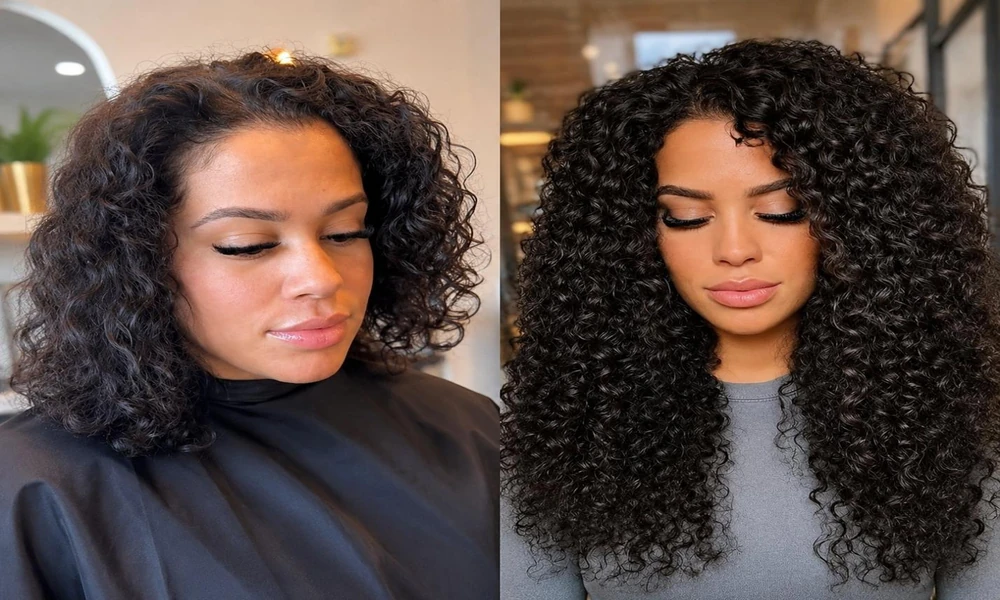
You’ve just finished installing a beautiful set of curly extensions, and everything looks perfect until you take a closer look in the mirror. Your natural curls seem tighter than the added hair, your roots appear flatter, or there’s an obvious difference in fullness between the top and bottom of your hairstyle. Sound familiar? Achieving a seamless curly hairstyle can be surprisingly challenging, especially when working with naturally textured hair that changes shape depending on moisture, styling products, and weather conditions. Even expensive, high-quality human hair extensions won’t automatically blend if their curl characteristics, density, or installation method don’t complement your own hair. Fortunately, most blending problems have practical solutions that don’t involve excessive heat or complicated styling routines. Understanding what causes these differences can help you achieve a fuller, more natural-looking hairstyle while keeping your natural strands healthy and comfortable.
1. Your Curly Extensions Don’t Match Your Natural Curl Pattern
Natural textured hair comes in a wonderful variety of curl patterns, from loose spirals to tightly packed coils. One common mistake is selectingCurly Hair Extensions simply because the curls look beautiful in product photographs. Unfortunately, attractive curls don’t always translate into a convincing texture match. Your hair’s curl diameter, strand thickness, natural shrinkage, and overall finish all influence how well the added strands blend.
For example, 3A hair typically features larger, looser spirals, while 3B curls are springier and more defined. Type 3C usually forms tighter corkscrews, whereas 4A hair has smaller, more compact coils. Type 4C often features very tight bends with less visible curl definition unless styled. These classifications are useful starting points, but many women naturally have several patterns growing from different areas of their scalp.
That’s why matching extension hair solely by curl type isn’t always enough. Deep curly textures often produce a polished, defined finish, while kinky curly varieties generally offer more compact curls and a fuller appearance. Two products labeled with the same curl category may also behave differently after washing.
How to fix it: Compare your natural hair and the extensions when both are completely dry and styled using similar techniques. Wet curls can stretch and temporarily appear looser, creating a misleading impression of compatibility. Pay attention to curl size, fullness, shrinkage, and how the strands respond to humidity. The goal isn’t necessarily an identical match but a complementary texture that creates a convincing overall hairstyle.
2. Your Extensions Have Too Much or Too Little Volume
Even when the curl patterns are closely matched, differences in hair density can make an installation look unnatural. Imagine having relatively fine natural hair around your crown while the extensions create enormous fullness underneath. Instead of flowing together, the hairstyle may develop a noticeable separation. The opposite problem happens when thick natural hair is paired with extensions that lack sufficient volume, leaving the ends looking thin or disconnected.
Women with naturally textured hair often experience significant changes in fullness depending on how their curls are defined, stretched, or separated. For instance,Burmese Curly Bundles may be worth evaluating when seeking a fuller, naturally textured finish, but their suitability still depends on the specific curl pattern, density, and hairstyle you’re trying to achieve. No single extension texture works equally well for everyone.
Length also influences the finished appearance. Very long extensions attached beneath shorter, tightly curled natural hair can create an obvious difference in shape. Meanwhile, strategically placed shorter pieces may contribute more to a believable silhouette than simply adding additional bundles.
How to fix it: Start with a moderate amount of hair and gradually increase fullness where needed. If your natural hair is fine or low-density, choose lightweight pieces and avoid overwhelming the crown. Medium-density hair generally benefits from balanced placement, while thick hair may require additional coverage to create an even silhouette.
Consider gentle layering to connect shorter natural strands with longer extensions. A professional stylist can shape the hairstyle without removing unnecessary length. Remember that natural-looking volume is about proportion rather than using the greatest possible amount of hair.
3. Your Installation Method Makes the Extensions Look Obvious
Sometimes, the hair itself isn’t the problem. Instead, how it’s installed creates an unnatural appearance. Visible clips, bulky wefts, poorly positioned tracks, or an uneven distribution of extension pieces can interrupt an otherwise beautiful curly hairstyle. These details become especially noticeable near the hairline, temples, and crown, where natural movement exposes the attachment points.
Curly clip-in extensions, for example, should generally be positioned beneath enough natural hair to conceal their clips. Placing bulky pieces too close to the parting can create raised areas that remain visible even after styling. If your hair is short, carefully planning each section becomes particularly important.
Sew-in installations present different challenges. Leaving out natural hair that doesn’t resemble the extension texture can produce visible separation at the roots. Poorly positioned tracks may also create an awkward shape that becomes harder to disguise as the curls expand.
How to fix it: Before installation, decide where you need fullness and where attachments can remain comfortably concealed. Position clip-ins in secure sections beneath adequate coverage, avoiding fragile edges and sensitive areas. For sew-ins, work with a stylist who understands natural hair textures and appropriate leave-out techniques.
If your natural hair differs significantly from the extensions, consider installation options that require less exposed leave-out, such as a properly fitted closure or suitable wig construction. Never depend on extremely tight braids, clips, or excessive tension to keep extensions secure. Discomfort, pulling, and scalp tenderness are signs that an installation needs adjustment.
4. Your Natural Hair and Extensions Are Styled Differently
One of the most overlooked reasons for poor curly hair blending is inconsistent styling. Your natural hair might be freshly moisturized and defined, while the extensions are dry and fluffy. Alternatively, the added hair may have beautifully separated ringlets while your own curls have become frizzy after several hours. Even closely matched textures can appear completely different when their moisture levels, definition, and finishes aren’t coordinated.
Natural hair also responds differently to products than extension hair. Your own strands receive natural oils from the scalp, although those oils may not travel easily along tightly curled hair. Human hair extensions don’t receive the same ongoing supply of scalp oils, so their conditioning needs can differ. Heavy styling creams and repeated product layering may also leave extensions coated, weighed down, or less responsive.
Shrinkage presents another challenge. A section of naturally coily hair may become significantly shorter as it dries, while the added curls retain more of their length. This can leave shorter pieces sitting visibly above the rest of the hairstyle.
Try this simple curly hair blending routine:
- Refresh carefully: Lightly mist the natural hair and extension sections that need reshaping, following the extension manufacturer’s care instructions.
- Coordinate your products: Use suitable lightweight leave-in conditioners, curl creams, or styling mousse where needed. Different hair sections may require different amounts.
- Shape similar-sized sections: Gently finger-detangle and define the curls using finger-coiling, small twists, or another appropriate curl-setting method.
- Allow complete drying: Let the hair air-dry or use a diffuser on an appropriate setting. Avoid unnecessary manipulation while the curls are forming.
- Adjust the volume: Once dry, gently separate selected curls to create an even finish without disturbing the entire hairstyle.
If your natural hair shrinks considerably more than the extensions, low-manipulation stretching methods such as loose banding or twist-outs may help coordinate the finished lengths. Avoid routinely straightening tightly coiled hair simply to make it resemble a different extension texture. A better texture choice often eliminates the need for excessive manipulation.
5. How to Keep Your Curly Extensions Blended All Day
Creating a seamless hairstyle is one achievement. Maintaining that appearance through humidity, outdoor activities, workdays, and special occasions is another. Curly and coily hair can respond dramatically to moisture in the atmosphere, sometimes expanding, shrinking, or developing frizz. When natural strands and extensions react differently, a previously balanced hairstyle may begin separating.
Repeatedly touching or brushing dry curls can make the problem worse. Constant manipulation disrupts curl groups, increases frizz, and may make the extensions appear less defined than the surrounding natural hair. Instead, focus on preserving the original styling pattern with gentle maintenance.
Daily maintenance: Before heading out, inspect the crown, sides, and ends for uneven definition or visible attachment points. Refresh only the areas that need attention using a small amount of compatible product. Avoid saturating the entire hairstyle every morning, particularly when working with installed wefts.
Nighttime maintenance: Protect your hair with a satin bonnet, scarf, or pillowcase to minimize friction. Depending on the hairstyle, loosely gathering longer curls into a high pineapple can help preserve their shape. Remove temporary clip-in pieces before sleeping to prevent unnecessary pulling and tangling.
Weekly maintenance: Assess whether product buildup, tangling, or dryness is affecting the appearance of your extensions. Clean and condition removable pieces according to their care instructions, and maintain the scalp and natural hair beneath installed styles. Avoid leaving the attachment areas persistently damp.
Most importantly, recognize when it’s time to reposition or restyle your extensions. Visible tracks, persistent tangling, slipping clips, or uncomfortable attachments shouldn’t be ignored. A comfortable installation and consistent care routine make maintaining a polished curly hairstyle considerably easier.
Ultimately, beautifully blended curly extensions depend on more than selecting attractive hair. The most convincing results come from understanding your natural texture, balancing fullness, choosing an appropriate installation method, and styling both hair sections consistently. Rather than forcing your natural curls to behave like an entirely different texture, look for extension options that complement their characteristics. With thoughtful placement, gentle techniques, and manageable daily maintenance, you can enjoy fuller, defined curls that move naturally while keeping your own hair’s health a priority.
Frequently Asked Questions
Why don’t my curly extensions match my natural hair?
Common causes include different curl diameters, shrinkage levels, hair density, color undertones, and styling techniques. Compare both textures when dry to identify the most noticeable differences.
Can I blend curly extensions with 4C natural hair?
Yes. Choose compatible kinky curly textures and consider gentle twist-outs or stretching methods where appropriate. You don’t need to repeatedly straighten your natural hair to achieve a cohesive appearance.
Should I wet my curly extensions to blend them?
Light dampening can help reshape certain human hair curls, but follow the manufacturer’s instructions. Avoid unnecessarily soaking installed extensions, particularly around braids and attachment points.
How do I make curly clip-in extensions look more natural?
Choose a complementary texture, distribute the pieces evenly, conceal clips beneath sufficient natural hair, and coordinate curl definition and volume. Avoid heavy attachments near fragile hairlines.